
The best e-commerce platform depends on what you sell: a store-first platform such as Shopify if products are your whole business, or an all-in-one platform such as Vonza if you also sell courses, memberships or a community from the same account. Several platforms lead the market, each with its own features, pricing and user experience. Running an e-commerce business is exciting. You get to design a brand, build a website, and share your products with the world. However, your major concern should be, which e-commerce platform is best for your business.
Watch on YouTubeLaunch your knowledge business on VonzaThis guide will explore the best e-commerce platforms, starting with Vonza, and provide a detailed comparison of various options available to entrepreneurs.
Click to Start your E-commerce Business
What is an E-Commerce Platform?
An e-commerce platform is a software solution that allows businesses to create, manage, and operate online stores. It acts as the backbone of any e-commerce operation, providing essential tools for product management, payment processing, inventory control, and customer engagement.
With the increasing popularity of online shopping, e-commerce platforms have become indispensable for businesses aiming to expand their reach and streamline sales processes. They enable merchants to design unique websites and manage their operations as their businesses grow and evolve.
Best Features of E-Commerce Platforms
E-commerce platforms offer various tools and features designed to streamline online selling and enhance the customer shopping experience. Below are some of the major features:
- Product Management
- Easily add, organize, and update product listings.
- Include detailed descriptions, high-quality images, pricing, and stock levels.
- Advanced inventory management tools to prevent overselling or stockouts.
- Shopping Cart
- Provides a secure and user-friendly interface for browsing and adding products to the cart.
- Supports features like saving items for later, applying discount codes, and calculating shipping costs.
- Ensures seamless transition from browsing to checkout with a simple user interface.
- Payment Processing
- Offers multiple payment options, such as credit/debit cards, PayPal, and digital wallets (e.g., Apple Pay, Google Pay).
- Ensures secure transaction processing with encryption and fraud prevention tools.
- Some platforms support multi-currency transactions to cater to global customers.
- Order Management
- Tracks orders from the moment they are placed to delivery.
- Automatically updates inventory levels and provides shipment tracking.
- Includes order modification and cancellation options for customers.
- Customer Management
- Stores customer profiles with purchase history and preferences.
- Enables personalized marketing through tailored product recommendations and email campaigns.
- Facilitates loyalty programs and customer feedback collection.
- Marketing Tools
- Integrated SEO tools to improve search engine rankings.
- Email marketing capabilities for reaching out to new and returning customers.
- Tools for running promotional campaigns, such as discounts, coupons, and sales events.
Types of E-Commerce Platforms
E-commerce platforms cater to various business needs and technical expertise levels. Here’s an overview of the main types:
- SaaS (Software as a Service)
- Offers subscription-based access to fully hosted solutions.
- Examples: Vonza, Shopify, BigCommerce.
- Pros: Easy to set up, no technical expertise required, includes updates and security.
- Cons: Limited customization and reliance on the service provider’s infrastructure.
- Open-Source Platforms
- Require technical knowledge or access to a developer but offer extensive customization.
- Examples: WooCommerce, Adobe Commerce.
- Pros: Freedom to customize, no recurring subscription fees.
- Cons: Hosting and maintenance responsibilities fall on the user.
- Custom-Built Solutions
- Tailored to the unique needs of a business.
- Examples: Platforms built in-house or by a dedicated developer.
- Pros: Offers complete control over design and features.
- Cons: High development costs and longer implementation time.
Why Do You Need an E-Commerce Platform?
An e-commerce platform is vital for businesses aiming to establish a strong online presence. Here’s why:
Watch on YouTubeSell Physical and Digital products with Vonza- Accessibility: E-commerce platforms enable your business to operate 24/7, reaching customers across the globe. It removes geographical limitations, thereby expanding market potential.
- Efficiency: It automates repetitive tasks such as inventory management, order processing, and shipping updates, reducing human errors and enhancing operational efficiency.
- Scalability: Platforms provide tools to grow your business, such as adding new product lines or expanding to new markets. While advanced platforms like Vonza can handle increasing traffic and sales volumes seamlessly.
- Customer Insights: E-commerce platforms offer analytics tools to track customer behavior, sales trends, and marketing performance. It also helps optimize product offerings and marketing strategies based on data.
Differences between e-commerce platforms and traditional retail?
E-commerce platforms operate entirely online, offering 24/7 access and the ability to serve a global audience. While traditional retail relies on physical storefronts with limited hours and a restricted customer base.
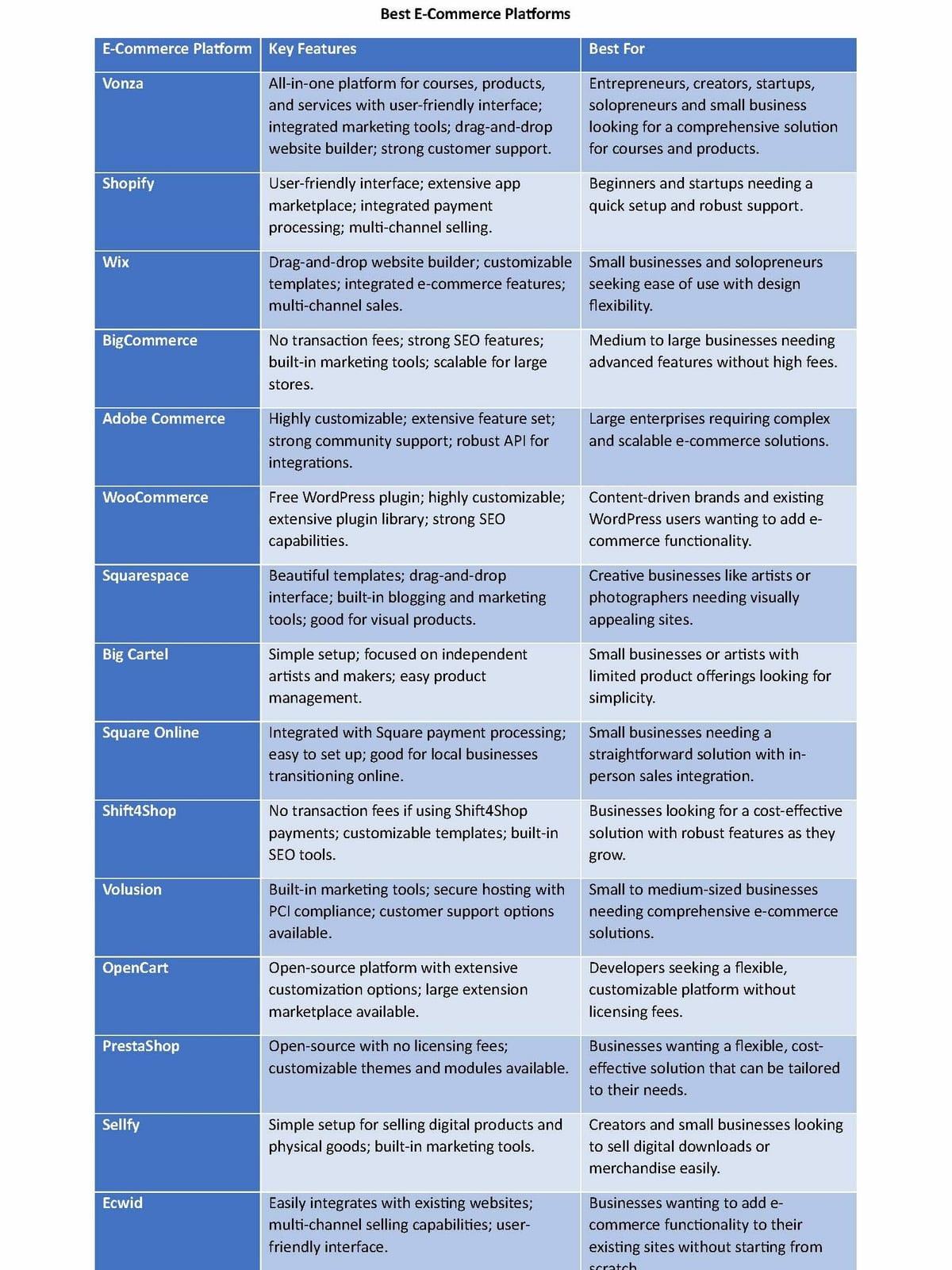
Best E-Commerce Platforms Comparison
1. Vonza
Vonza is an all-in-one platform for creators and small businesses: the online store sits next to courses, memberships, communities, funnels, checkouts and email marketing in one account, so you don't need a separate tool for each.
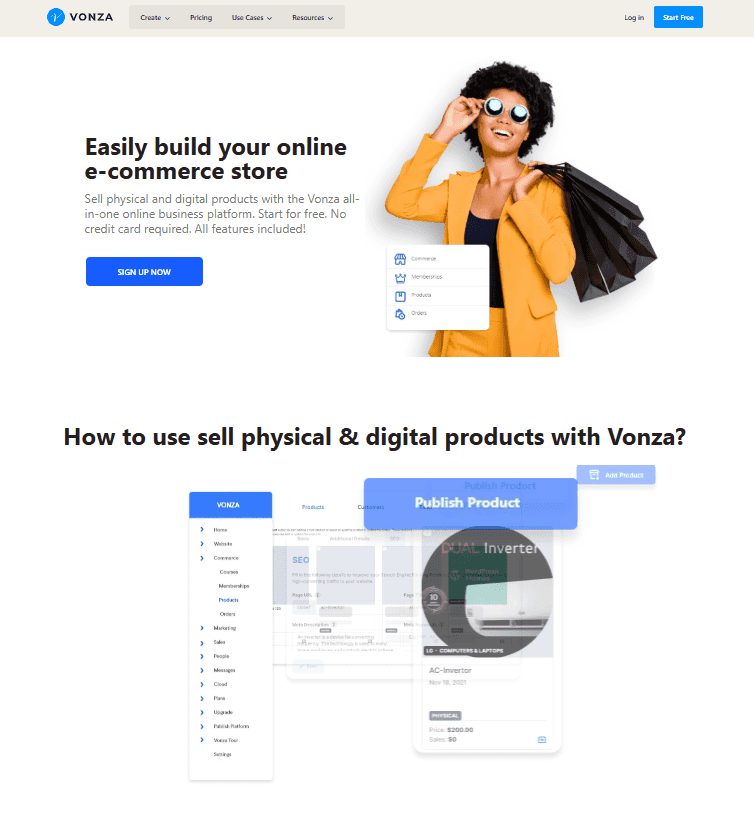
Vonza e-commerce features:
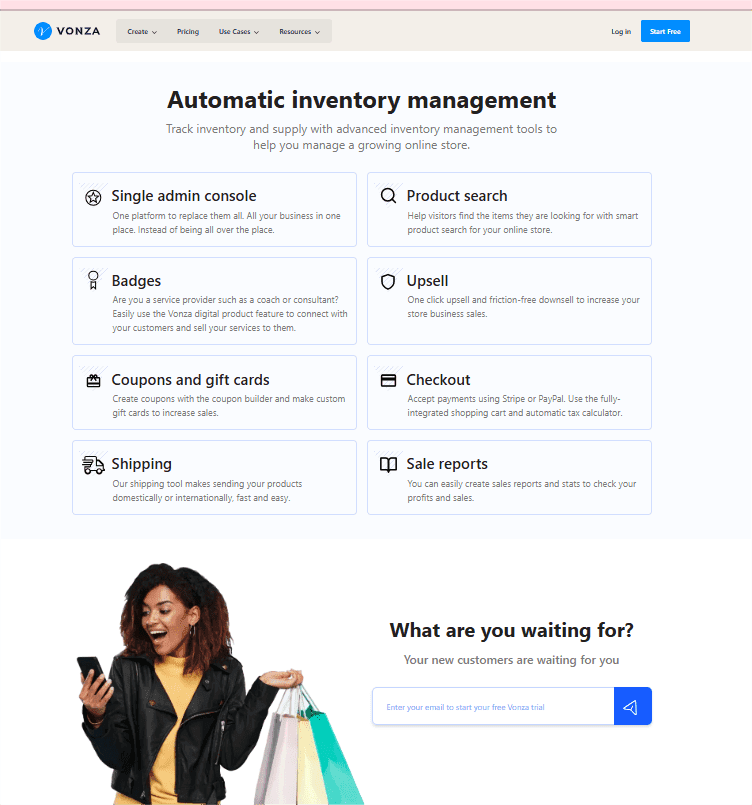
- Physical and digital products: sell goods with stock and shipping zones, and digital downloads delivered as a download link right after payment.
- Secure checkout: take payments through your own connected Stripe or PayPal account, or through Paystack for sales in Nigerian naira, with coupon codes at checkout.
- SEO for every product: each product has its own SEO title, description and URL.
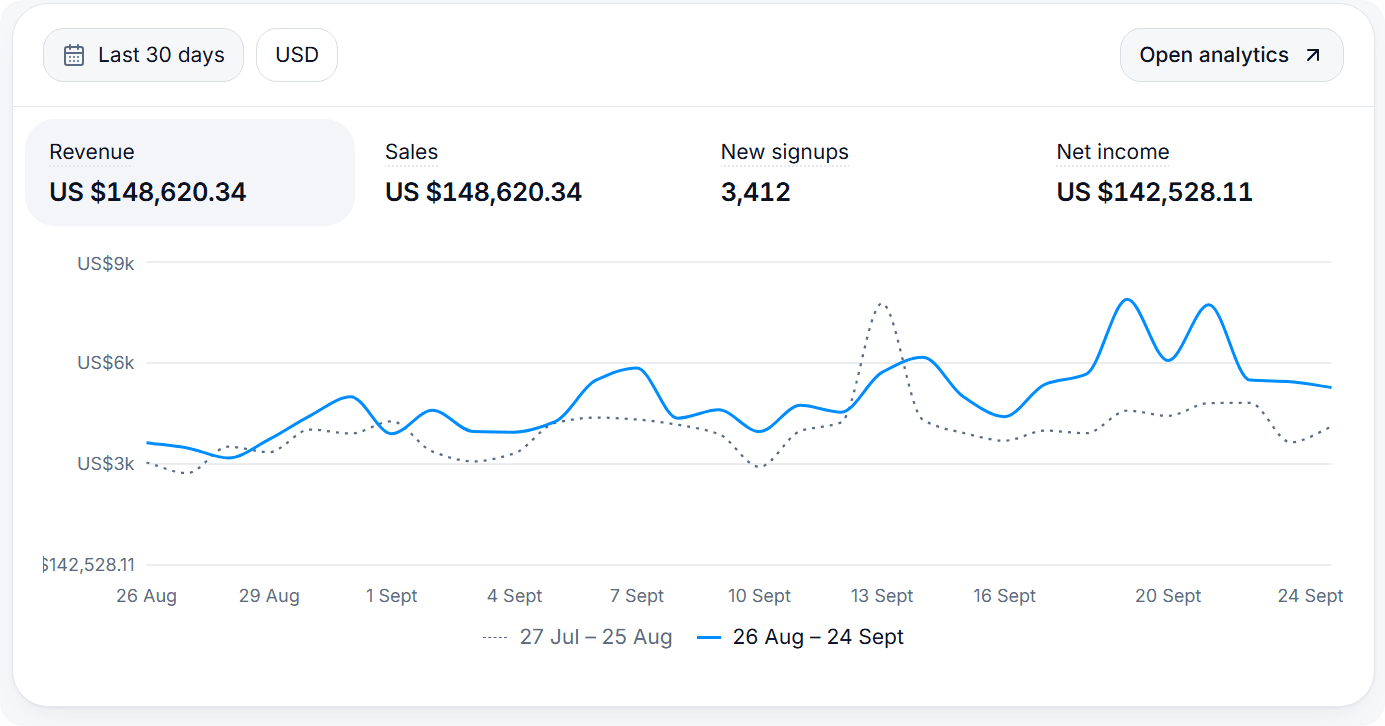
- Built-in analytics: track product sales and customers.
- Sell more than products: a Vonza checkout can also sell a course, membership, bundle or community, with up to 5 order bumps and a one-click offer after payment.
- Marketing in the same place: email marketing, sales funnels and landing pages.
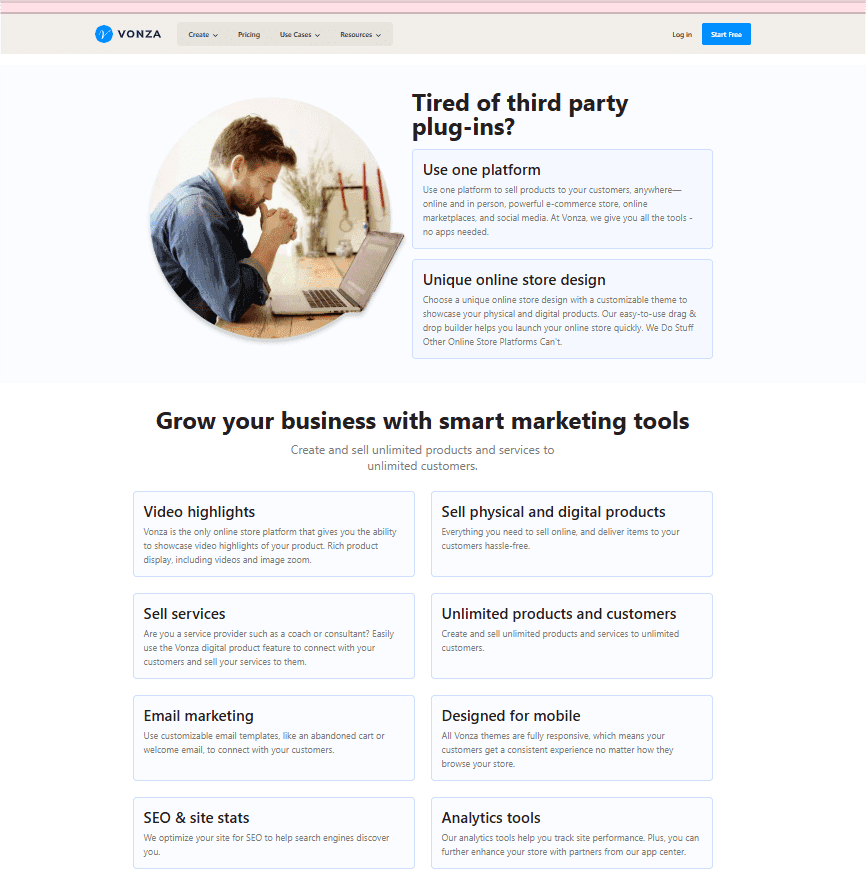
Newer store pages: sellers can switch on Vonza's newer store pages, which add a cart, a choice of checkout layouts, order bumps, a one-click offer after payment, and more product types: services, bundles, gift cards, licence keys and paid links.
What we like about Vonza:
- The store, courses, community, funnels and email in one account.
- Easy to set up without code.
- Upsells and order bumps built into the checkout.
Cons of Vonza:
- Relatively newer compared to long-standing platforms.
- The number of products depends on your plan.
Plans and pricing
Vonza plans start with a 14-day free trial.
2. Shopify
Shopify is also a good e-commerce platform. Its self-hosted software helps you sell everywhere your customers are, with features to handle all aspects of retail, from website design and product management to finances.
Why choose this e-commerce platform?
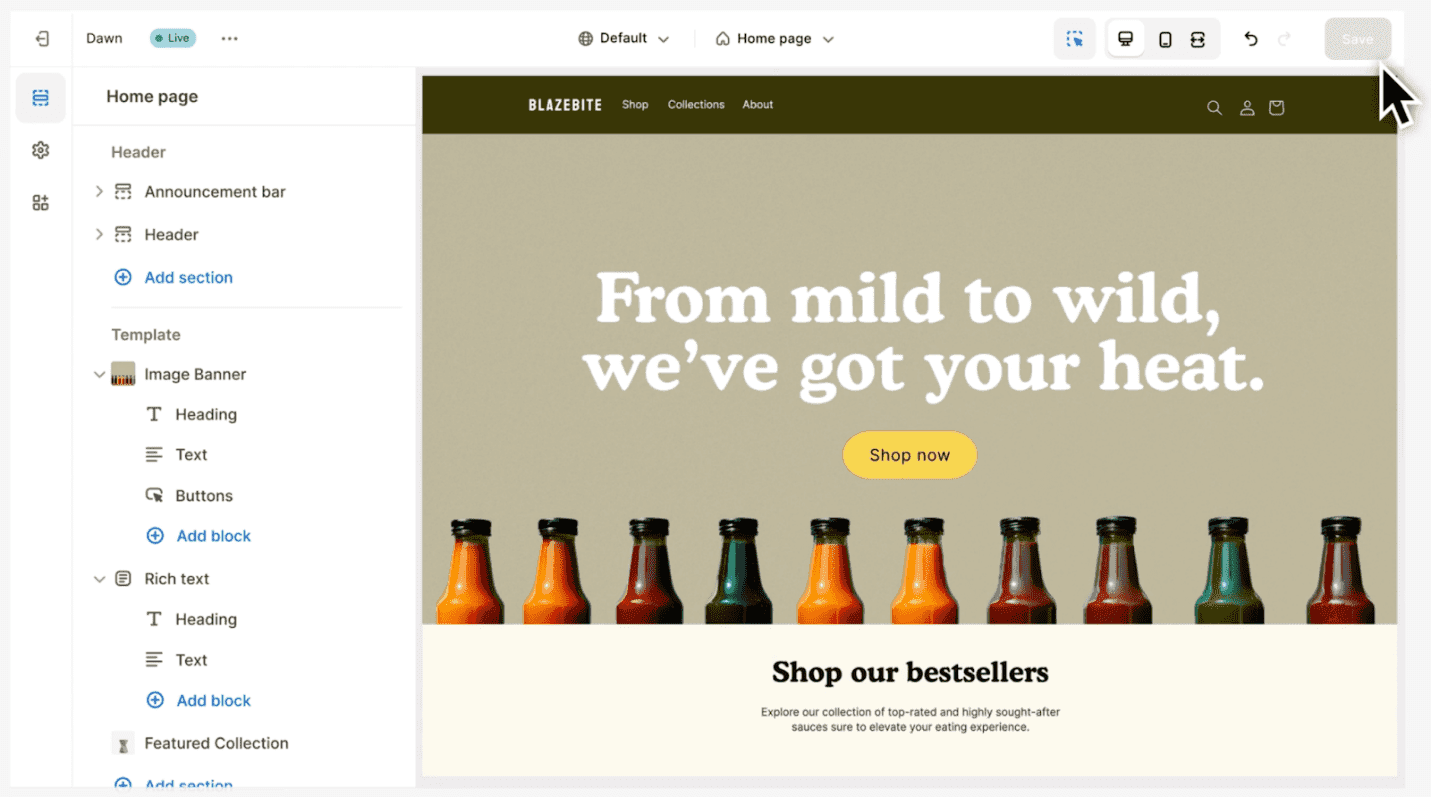
With Shopify, you can start a business from home and grow until you’re an international brand with physical storefronts. It’s a platform that supports individual business journeys, with a single admin to manage your entire business, optimize your store, sell on social media, or explore popular retail models.
Plans and pricing
The Basic plan is $25 a month, or $19 a month billed yearly, with a 3-day free trial (shopify.com/pricing, read 5 November 2026).
Store builder
Shopify’s user-friendly store builder offers no-code, mobile-friendly themes. Optimize unlimited product listings with the editor’s built-in AI assistant, which helps generate product descriptions and manage site content. As your business grows, enhance your website’s functionality with third-party apps. or develop a completely custom online storefront.
Selling features
Shopify supports selling through your website, directly on social media and marketplaces, wholesale to other retailers, and in-person with Shopify POS. Features like abandoned cart recovery and targeted email campaigns help capture more sales, while tools for international selling make cross-border e-commerce simple.
Payment processing
Every Shopify plan includes a native payment provider that accepts all major payment methods as soon as you launch. Plus third-party payment providers are compatible.
Shopify’s checkout is highly customizable, letting merchants offer customers a variety of payment options, including express checkout, in-store pickup, discount codes, and Shop Pay—the best-converting checkout option on the internet.
3. Wix
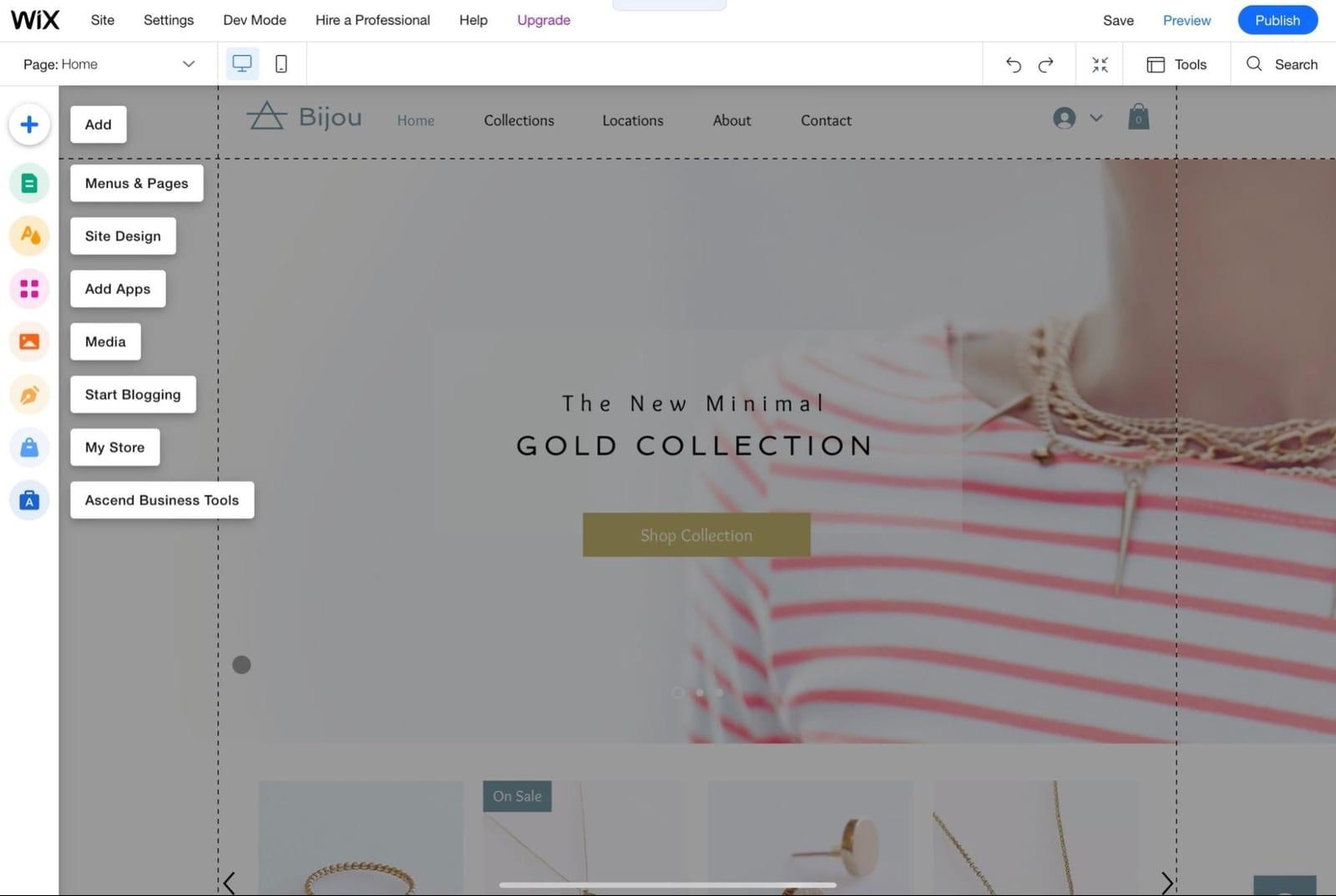
Wix is a versatile drag-and-drop website builder that offers customizable templates, web hosting, and domain name registration. While you can build a basic website for free, accessing the platform’s e-commerce features requires an upgrade to a paid plan.
Why choose this e-commerce platform?
Wix is designed to simplify online selling. It allows you to accept payments, track orders, and manage inventory across multiple channels.
Plans and pricing
See the vendor’s pricing page for current plans and prices.
E-commerce features
Wix integrates with sales channels like Facebook and Instagram through the third-party app Ecwid. The mobile app lets you manage your website, and like Vonza, there’s a native POS system for in-person selling.
However, Wix lacks native ecommerce features that many product-based businesses need. For example, there are no built-in low-stock alerts, and other inventory management features are missing. To get those features and the ability to sell through social media, you’ll need to rely on third-party apps.
Pros and cons
- Fully hosted
- Free basic plan
- Tracking and analytics require a paid plan
- Lack of inventory management features
4. BigCommerce
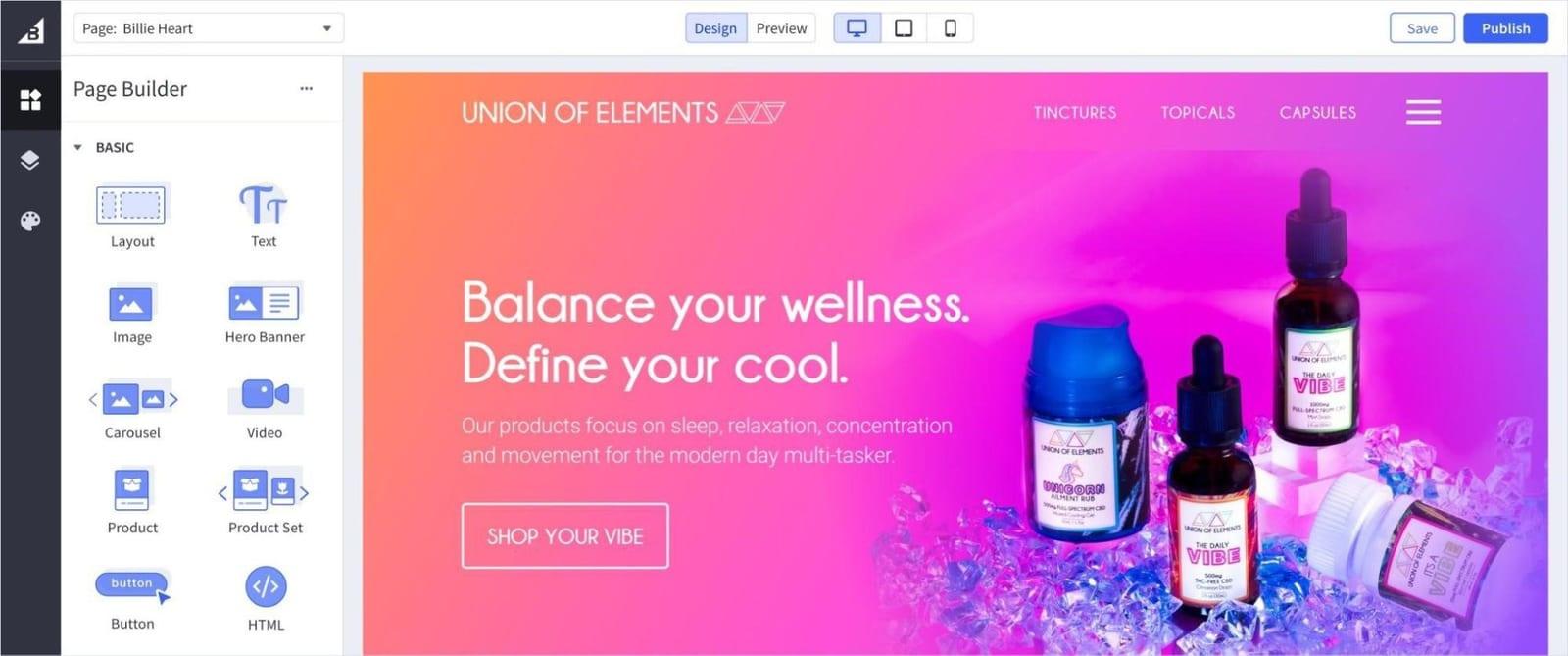
Like Vonza and Wix, BigCommerce offers web hosting and customization options for your e-commerce store, as well as tools for international selling, SEO, and listing products on marketplaces.
Why choose this e-commerce platform?
BigCommerce is favored by enterprise-level companies for its features that support large-scale retail. However, it’s important to note that some users find the platform less flexible and user-friendly compared to others.
Plans and pricing
See the vendor’s pricing page for current plans and prices.
E-commerce features
BigCommerce integrates with sales channels like Google Shopping, Facebook, price comparison engines, Amazon, and Etsy. The mobile app allows you to view analytics and manage inventory on the go, although some features are Android-only. There is also no native POS system.
The need for an easy, flexible interface was a major factor in clothing brand Grace & Lace’s decision to migrate from BigCommerce.
Pros and cons
- Fully hosted
- Management tools for big businesses
- No native POS
- Expensive themes
- Some merchants find design tools lack user-friendliness
5. Adobe Commerce (formerly Magento)
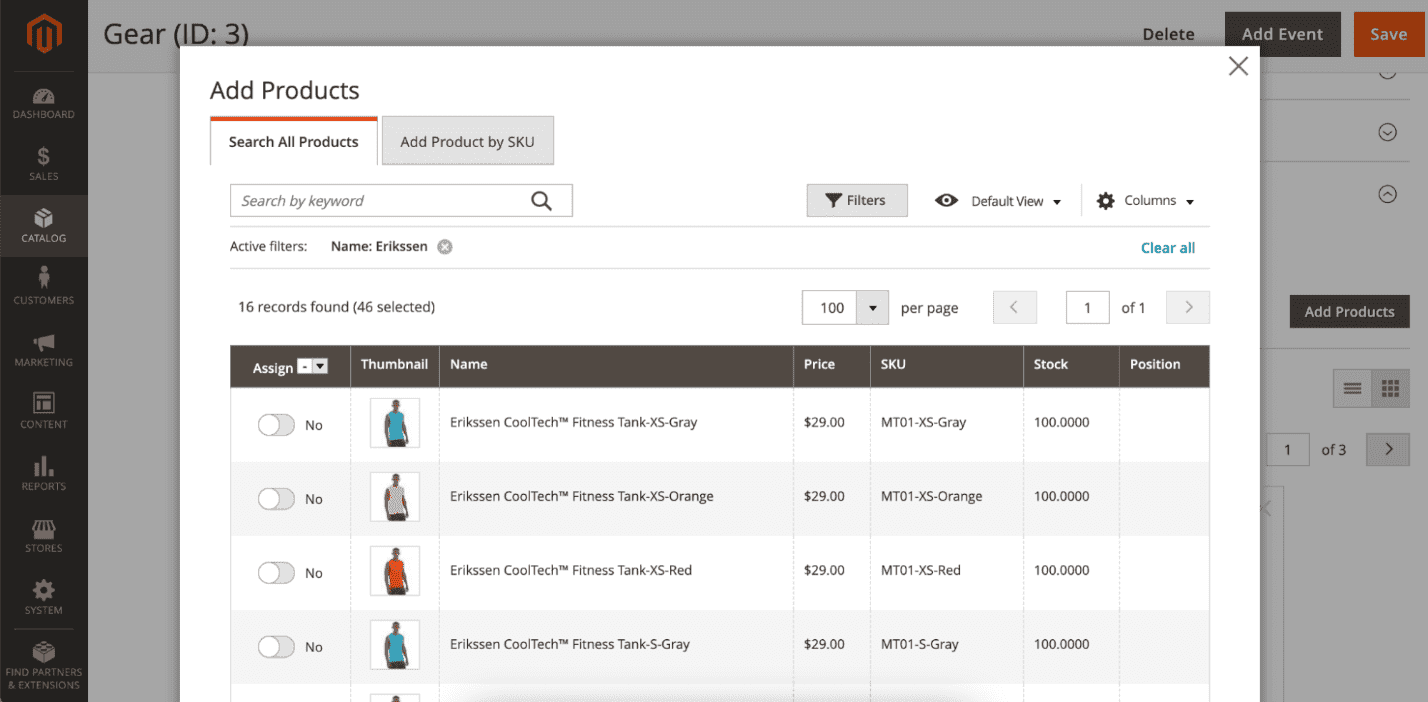
Adobe Commerce is a powerful, non-hosted e-commerce platform designed for developers and large businesses that want a customizable online store.
Why choose this e-commerce platform?
Adobe Commerce is ideal for brands seeking a high level of customization. It offers extensive flexibility but typically requires an in-house developer to maximize its potential and maintain the site.
Plans and pricing
Adobe Commerce offers custom pricing based on the specific needs and scale of your business.
E-commerce features
The platform integrates with Amazon sales channels. However, it lacks out-of-the-box features for a seamless multichannel strategy. There isn’t an easy way to turn on social commerce or marketplace selling. The same goes for handling international transactions.
Pros and cons
- Supports custom store designs
- Hosting not included
- Requires technical knowledge
- Lacks out-of-the-box e-commerce features
6. WooCommerce
Not strictly an e-commerce platform, WooCommerce is a free, open-source plugin that transforms a WordPress website into a fully functional online store.
Why choose this e-commerce platform?
Ideal for those already familiar with WordPress, WooCommerce integrates e-commerce capabilities into your existing blog-focused website, allowing you to add product listings, a shopping cart, and checkout functionalities.
Plans and pricing
The core WooCommerce plug-in is free, but additional e-commerce features and website hosting may incur extra costs.
E-commerce features
WooCommerce supports integrated sales channels and payment providers, though these integrations can be somewhat disjointed. The mobile app allows you to add products, manage orders, and view analytics. WooCommerce also offers a native POS system.
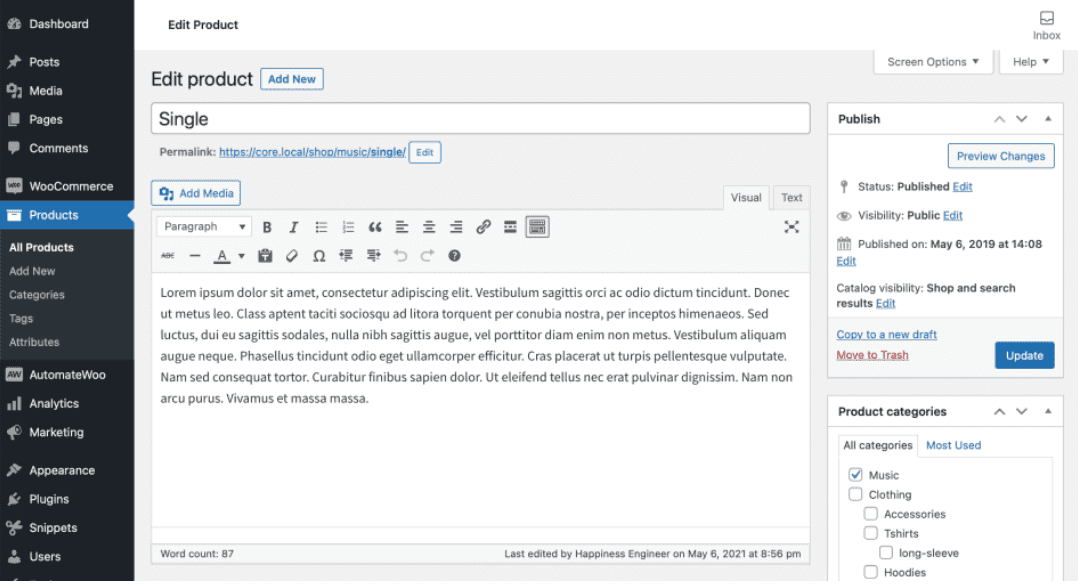
With additional paid extensions, you can use WooCommerce to create an advanced e-commerce website, including customizable themes, shipping, security, and other standard features. Both native and third-party WooCommerce extensions are available.
While some merchants appreciate this ability to choose the features they want, many find WooCommerce’s add-on structure to be a disadvantage. With different functions of your store spread across a web of plug-ins and extensions, it can be hard to keep track of how much you’re paying—and that’s on top of the cost of hosting and maintaining your WordPress website.
Pros and cons
- Multiple integrations
- Active expert community
- For WordPress websites only
- Self-hosted
- Requires merchants to manage multiple costs and plug-ins
7. Squarespace
Squarespace is a user-friendly drag-and-drop website builder that offers a sleek design and e-commerce capabilities when you upgrade to a higher-tier plan.

Why choose this e-commerce platform?
Once upgraded, Squarespace allows you to transform your website into an online store with a secure checkout that accepts payments through multiple gateways like Stripe, PayPal.
Plans and pricing
See the vendor’s pricing page for current plans and prices.
E-commerce features
Squarespace includes inventory tracking and management features, like printing shipping labels and selling subscription products. If you’re running a Squarespace site, you can add a Vonza Buy Button, allowing you to sell an unlimited number of products through Vonza’s secure checkout.
Pros and cons
- Professionally designed templates
- No transaction fees
- Not an e-commerce-focused platform
- Limited multichannel sales support
- It is hard to override theme CSS and HTML
8. Big Cartel
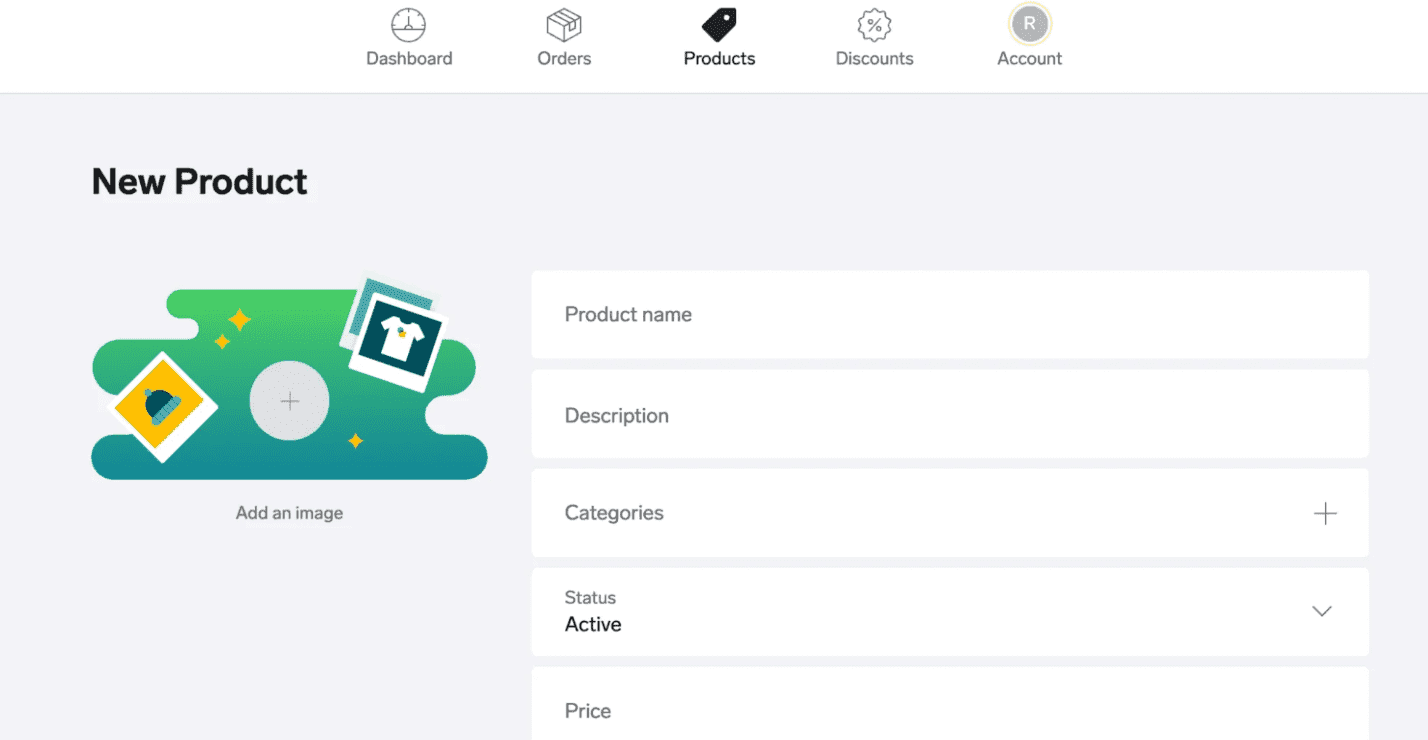
Big Cartel is a fully hosted e-commerce platform for artists and makers. It offers a straightforward approach to selling online with a focus on simplicity and basic functionality.
Why choose this e-commerce platform?
Big Cartel is for small-scale artists and creators who need an easy-to-use platform with essential features. It is known for a simple, low-cost way to start.
Plans and pricing
See the vendor’s pricing page for current plans and prices.
E-commerce features
Its features are deliberately simple, with fewer images per product and fewer payment gateways than larger platforms.
It’s also worth noting that Big Cartel’s pricing is based on how many products you list, so your expenses will increase as your business grows.
Pros and cons
- Simple to set up and start selling
- Designed for artists and creatives
- Low levels of customization
- Lacks advanced e-commerce features
- Extra costs for larger inventory
9. Square Online
Square Online, formerly known as Weebly, is a straightforward e-commerce platform for small businesses. It integrates with Square’s payment solutions, bridging the gap between online and in-store sales.
Why choose this e-commerce platform?
Square Online works well for merchants who already use Square for their physical store sales and want to expand online without hassle. The platform’s integration with Square’s payment system makes managing sales across different channels straightforward.
Plans and pricing
See the vendor’s pricing page for current plans and prices.
E-commerce features
You can start building your store for free with Square Online. However, to use your own domain or remove in-app ads, you’ll need to upgrade to a paid e-commerce plan. Integrating additional sales channels and other advanced features may also be more difficult than with other platforms.
Pros and cons
- Mobile-first store designs
- Extensive free version
- Lacks advanced e-commerce features
- Primarily for Square Payments users
10. Shift4Shop
Shift4Shop is a simple tool for creating an online store, offering a straightforward setup and mobile-friendly design.
Why choose this e-commerce platform?
Shift4Shop is not packed with features, but it’s easy to use and works well for mobile users. The platform also allows you to link your store with other applications using its API, making it flexible for those who need basic e-commerce functionality.
Plans and pricing
See the vendor’s pricing page for current plans and prices. Its pricing has depended on whether you use Shift4Shop’s own payment gateway.
E-commerce features
Shift4Shop integrates with eBay, Amazon, and Facebook for sales channels. However, it does not offer a mobile app. Point-of-sale options are available for purchase separately.
Pros and cons
- Extensive shopping cart solution
- E-commerce builder is free for existing Shift4Shop checkout users
- Harder to personalize your store than with Shopify
- Lack of advanced commerce features
11. Volusion
Volusion is one of the oldest e-commerce platforms, established in 1999. It’s designed to help small businesses get online with a no-frills approach to building a homepage and product pages.
Why choose this e-commerce platform?
Volusion makes it easy to integrate with multiple payment gateways and provides essential tools for creating an online store without unnecessary complications.
Plans and pricing
See the vendor’s pricing page for current plans and prices.
E-commerce features
Volusion’s straightforward setup allows you to focus on selling physical goods. However, the platform does not support the sale of digital products. So, if you want to sell ebooks or music, you’ll need another e-commerce solution. A mobile app, integrated sales channels, and native POS are also lacking.
Pros and cons
- User-friendly website builder
- Restricted features with the basic plan, which is still expensive
- Plans have limits for sales volume and product listings
- No free SSL security
- No support for digital product listings
12. OpenCart
OpenCart is a free, open-source e-commerce platform that’s simple to set up.
Why choose this e-commerce platform?
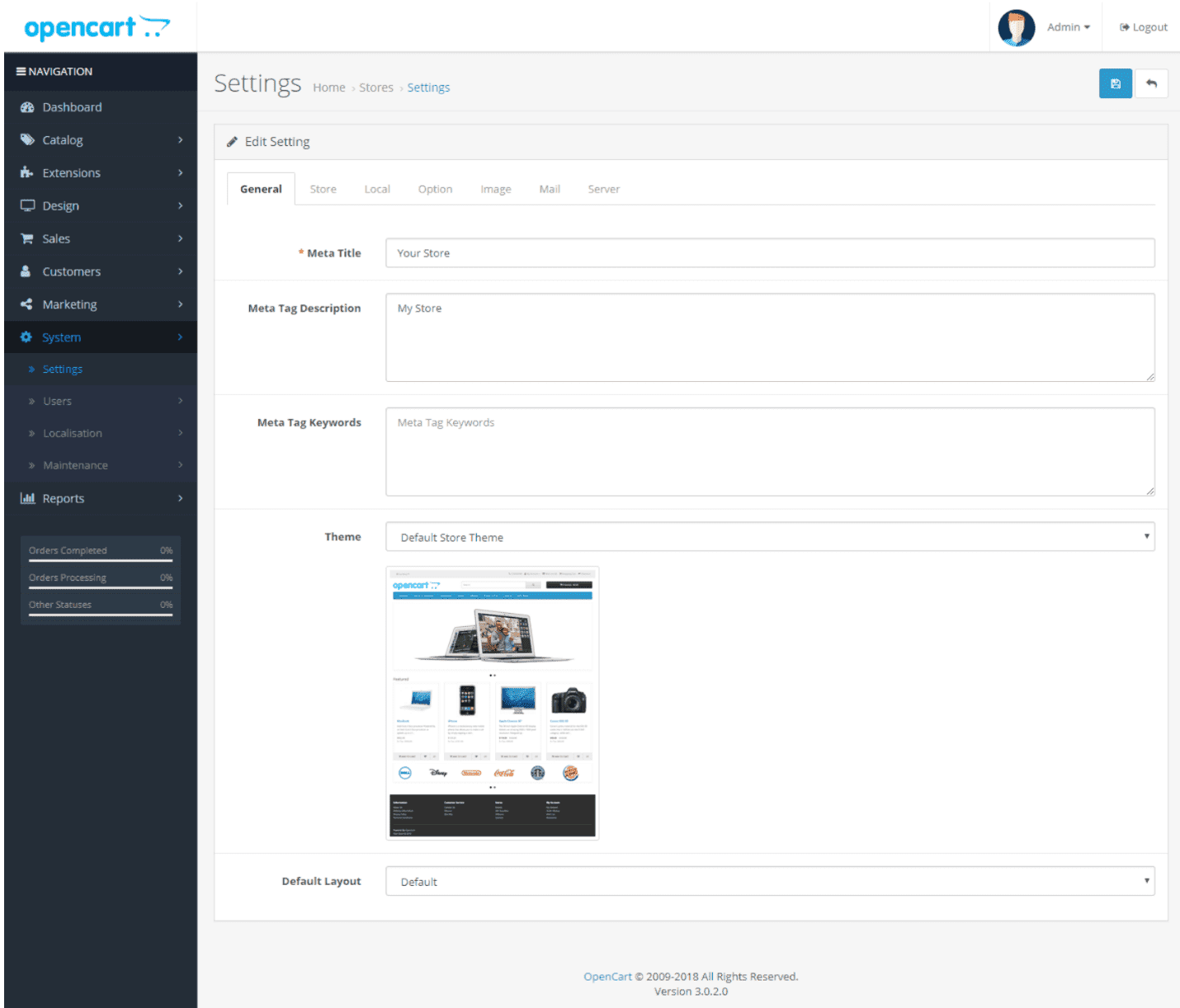
The platform lets you create and manage multiple stores, with a dashboard that shows important metrics like sales and repeat customers.
Plans and pricing
Free.
E-commerce features
OpenCart has modules and free themes that you can build on to create your own website, along with plenty of integrations to connect your tools.
Pros and cons
- Free and open-source
- Limited marketing and sales features
- Self-hosted
13. Sellfy
Sellfy is an eCommerce platform for small businesses. It enables you to sell merchandise and digital products, but it works well for all kinds of small stores.
Why choose this e-commerce platform?
Just like Vonza, you can sell physical and digital products or subscriptions on Sellfy. There are built-in marketing apps, website embedding, and upselling options.
Plans and pricing
See the vendor’s pricing page for current plans and prices.
E-commerce features
Sellfy has 7 integrations including Zapier, which lets you connect Sellfy to apps. And you can accept payments through PayPal and Stripe. Customer service is available 24/7 but only over email.
Pros
- Print on demand
- Freebie category
- marketing features
Cons
- 5 themes
- 7 integration options but Zapier is available
14. PrestaShop
PrestaShop is an e-commerce solution written in PHP. It is a good platform for small to medium businesses that need a simple e-commerce store. If you’re on a budget, you might not want a platform with high monthly costs. Then the freemium PrestaShop is worth considering. If you have development skills and want full control over store design, this could work.
Why choose this e-commerce platform?
On PrestaShop platforms, you can create products and sort them into categories. PrestaShop has an advanced inventory management system. The community support includes contributors who help optimize the source code.
Plans and pricing
Free.
E-commerce features
Using PrestaShop seems straightforward. Simply download the software, or your website comes pre-installed and hosted by IONOS. There is a coding environment included. You get daily backups and 24/7 technical support.
Like other top ecommerce platforms, you can create products and sort them in categories. PrestaShop has an advanced inventory management system. The community support includes contributors who help optimize the source code.
Pros
- Possibilities for custom designs
- Active e-commerce community with ideas and solutions
- Integration options for apps and payment providers
- Good SEO capabilities
Cons
- You must pay for support
- Technical knowledge is essential to get set up
- Expensive to build a store with advanced functions
- No multichannel feature on PrestaShop Open source
15. Ecwid
Ecwid is an e-commerce platform known for its speed and ease of use.
Why choose this e-commerce platform?
Ecwid makes it easy to turn an existing site into an online store. It’s a beginner-friendly dive into e-commerce. You don’t have to start from scratch, and it’s relatively cheap. Check which features its entry plans include before you commit.
Plans and pricing
See the vendor’s pricing page for current plans and prices.
E-commerce features
It is a multi-channel e-commerce platform you can integrate with other e-commerce marketplaces or social media.
If you already have a WordPress or Drupal business, Ecwid is a smart addition. You can quickly build a bigger e-commerce business. Unfortunately, the site may get slow when you scale. So it is a good option for smaller businesses, but not for large enterprises.
What Is the Best E-Commerce Platform?
Selecting the right e-commerce platform depends on various factors, including your experience level, budget, and business objectives. While it may be tempting to choose a popular platform, that choice isn’t always the best fit for your unique needs. Here’s a comprehensive guide to help you make an informed decision. According to Yahoo, “The e commerce global market is predicted to witness surge in increase due to wide variety of different elements such as developing Internet services with hello-pace bandwidth, extraordinary mobile penetration, market stability, product personalization and localization alongside with declining Internet expenses.”
Top E-Commerce Platform for Beginners
Starting an online store can feel overwhelming with so many platforms and features to navigate. For beginners, simplicity and ease of use are key.
- Best Choice: If you’re starting from scratch and also want to sell courses, memberships or a community, Vonza puts the store and those tools in one account.
- Other Options: For those with an existing website, platforms like Shopify, Sellfy and Ecwid are ideal. They allow you to seamlessly transform your site into an online store.
Top E-Commerce Platform for Small Businesses
Small businesses need secure and reliable platforms that minimize downtime and ensure PCI compliance.
- Recommended Platforms: Vonza is a strong choice when the store is one part of a business that also sells courses, coaching or a community.
- Other Options:
- Shopify: Simplifies operations with automatic shipping features, saving time.
- Volusion: Includes free tools for business growth and small business loans to support expansion.
Best E-Commerce Platform for Jewelry Stores
Jewelry remains one of the top niches in e-commerce, and your platform choice should align with your business strategy.
- Easy-to-Use Platforms: Vonza, Shopify, and Wix are great options for launching a jewelry store.
- For SEO and Content Marketing: To build organic traffic through content marketing, WooCommerce paired with a WordPress blog is the best choice, helping you establish your brand authority.
Best E-Commerce Platform for Developers
For users with coding skills, advanced platforms provide opportunities to create highly customized websites.
- Best Customization: Adobe Commerce is ideal for building large, tailored stores, allowing for advanced customization and scalability.
- Budget-Friendly Option: If you’re looking for a free, open-source alternative**,** PrestaShop is a great choice for cost-effective website customization.
- For Scaling Businesses: Shopify and BigCommerce have large app ecosystems for growing catalogues.
Conclusion
E-commerce platforms are indispensable for businesses aiming to succeed in today’s digital economy. They offer comprehensive tools for managing online sales, streamlining operations, and enhancing customer experiences—from product management to secure payment processing. By leveraging the right e-commerce platform, entrepreneurs can focus on scaling their ventures and staying competitive in the rapidly evolving online marketplace. Understanding the features, types, and benefits of e-commerce platforms empowers you to make strategic choices that align with your business goals. Whether you’re launching your first store or scaling an established brand, selecting the ideal e-commerce platform is a vital step toward achieving sustainable growth and success in 2025 and beyond.