If you coach, consult, teach or design for clients in Nigeria, a lot of your income does not come through a checkout page. It comes from a proposal you agreed on a call, a retainer you renew every month, or a workshop a company booked for its team. Those clients need an invoice, and you need a way for them to pay it in naira without a bank-account number copied into a chat.
This guide covers what a naira invoice should include, how to send it so it gets paid on time, and how to do the whole thing in Vonza invoicing, where your client pays through Paystack on your own site.
What a naira invoice should include
A client's finance team will look for the same things on every invoice, whatever currency it is in:
- Your business name and contact details, and the client's, exactly as they should appear in their records.
- An invoice number that you never reuse, such as INV-0042.
- The issue date and the due date, written as calendar dates.
- Each item of work, with a quantity, a rate and a line total.
- Tax, if you charge it, as a percentage with the amount worked out.
- The total in naira, written with the currency so nobody has to guess.
- How to pay, ideally a link that opens the invoice and takes payment.
If you are starting from scratch, the free invoice generator lays all of this out for you, and our guide on how to send a professional invoice goes through each part.
Price in naira, not in dollars
Quote and invoice Nigerian clients in naira. A client who receives a dollar invoice has to work out the exchange rate, ask finance which rate to use and, often, ask you to reissue the invoice. A naira invoice avoids that conversation, and it matches what the client's bank statement will show.
Round numbers help too. A coaching package at NGN 150,000 is easier to approve, forward and remember than one at NGN 148,750. If a large invoice is hard for a client to pay at once, agree on separate invoices for each stage of the work, each with its own due date.
Make the due date easy to hit
Most late invoices were never refused. They were opened on a busy day and forgotten. Three habits fix most of it:
- Send the invoice to the person who pays. Ask at the start who approves invoices, and send it to them as well as to your contact.
- Give a clear due date. "Due 15 March" works better than "net 14", which leaves the client to count the days.
- Remind before the due date, not after. A short note a few days before is customer service, not chasing. Our payment reminder email templates give you the wording.
How to invoice in naira with Paystack on Vonza
On Vonza, an account that sells in Nigerian naira is paid through Paystack, and its invoices are in naira. Here is the flow from start to finish.
1. Set your account to naira and link your bank
Your account's currency is set in Settings, and every invoice you create uses it. Choose Nigerian naira, and Paystack becomes your payment provider. Then link the Nigerian bank account your payouts should go to and pass the identity check in your payment settings. Our guide to selling online in Nigeria with Paystack covers this setup, payouts and Paystack's published fees.
2. Create the invoice
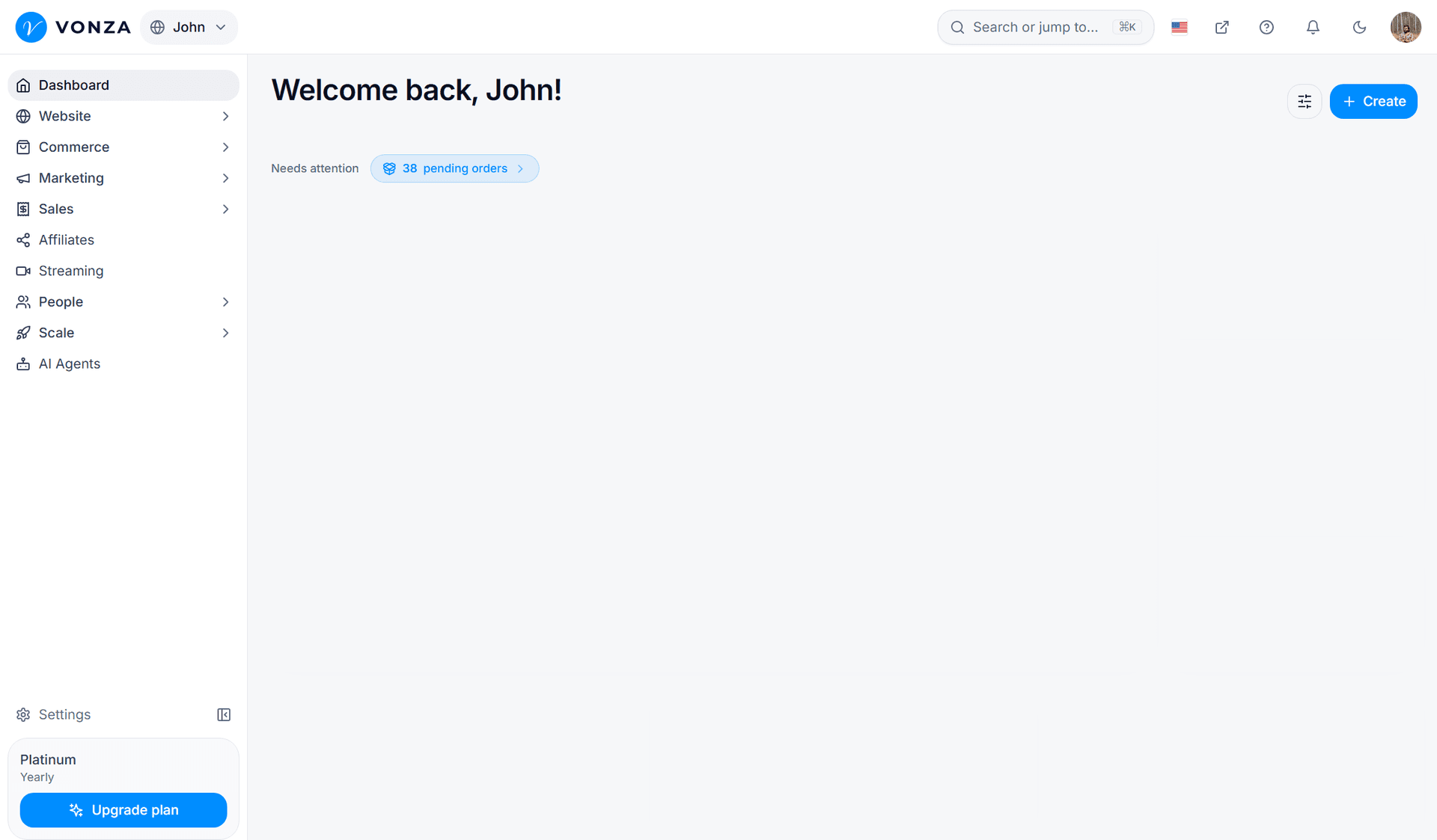
Open Invoices in your Vonza dashboard and create a new one. You add:
- an invoice name and number, the issue date and the due date,
- who it is from and who it is to,
- your logo,
- the line items, each with a quantity and a rate,
- one tax percentage, if you charge VAT or another tax, and Vonza works out the amount,
- a note, such as what the invoice covers or your payment terms.
You can preview the invoice, download it as a PDF or print it.
3. Share it with your client
Choose a customer to email the invoice to them, with its amount, currency and due date, or copy the invoice's secure link and send it however you usually talk to that client.
4. Your client pays through Paystack
The link opens the invoice on your own site. Your client pays in naira through Paystack, by card. They do not need an account: a client who pays from the link is added to your customers. A client who already has an account with you can also open the invoice from their customer portal and pay it there.
PayPal and the Stripe wallet buttons do not appear on a naira invoice, because naira accounts are paid through Paystack.
5. Set reminders before the due date
Set reminder emails to go out a set number of minutes, hours or days before the due date, with your own sender name, reply-to address, subject and message. The invoice number, amount and due date fill themselves in. Reminders go to the customer the invoice was shared with, and only while it is unpaid.
6. Track what is paid
When the client pays, the invoice moves from Pending to Paid, the payment is recorded, the client gets a confirmation email and you get a notification. Your invoices page shows what you have sent, received and still have pending. Because the client is now a contact in your CRM, the "User pays an invoice" trigger can start an automation, such as a welcome email for a new coaching client.
What Vonza invoices do not do
It is better to know the limits before a client asks:
- One currency per account. Invoices use your account's currency. A naira account invoices in naira only.
- No recurring invoices. Each invoice is created and sent on its own, so a monthly retainer is a new invoice each month.
- No invoice templates or deposits on an invoice. For a deposit on a session, a paid booking in Vonza Scheduling can take payment when the client books.
- One tax rate per invoice, and no discounts or late fees on the invoice itself.
If you also sell courses, memberships or products to the public, a checkout page is the better tool for those: it takes payment in naira through Paystack without an invoice at all, and can offer payment plans.
Start with one real invoice
The quickest way to see if this fits your business is to send one real invoice to a client you already work with. See the naira plans, then create your first invoice, set a reminder before its due date and send the link.